The Hexacoto

Listening to the sound of one hand clapping

Tag: Singapore

Linguistic superiority is bunk

Someone once said to me, “哎呀,你的中文那么不标准!”

That basically meant: Aiya, your Chinese is really substandard!

And that was in response to me telling them my Chinese name. That someone was from Beijing, China, and I am from Singapore. We both speak Chinese, but upon hearing my pronunciation of certain words different from the way they do it, they denounced it as being substandard, for not being the “Beijing standard.”

Thus, they claim linguistic superiority of Chinese over any other regional differences.

It’s not even the way Cockney differs from RP in England, or African American Vernacular differs from General American English — in Wikipedia, the Chinese spoken in Singapore and China are both called “Standard Chinese,” but inevitably there are bound to be phonological differences, that even Wikipedia cannot capture.

A very basic example is the way my name is pronounced.

A character in my name, 俊, is transcribed in pinyin as “jùn”. As many of my friends from China would pronounce it, and the way Wikipedia transcribes it, they say:

/t͡ɕyn/

with a /voiceless alveolo-palatal affricate + high front rounded vowel + alveolar nasal/. There is a very audible “tch” sound at the onset of the word.

In Singapore, that character in my name would be pronounced:

/d͡ʒyn/

with a /voiced palato-alveolar affricate + high front rounded vowel + alveolar nasal/. That means that the initial “j” sound in Singaporean Chinese is similar to the way “judge,” “gee,” and “job” is pronounced in English. There is no “ch” sound audible at the onset of the word.

Another difference would be the character 需, xū, as in “to need.” In China, it would be pronounced:

/ɕy/

with a /voiceless alveolo-palatal sibilant + high front rounded vowel/. There is a very audible, thin “sss” sound at the onset of the word.

In Singapore, that character would be pronounced:

/ʃy/

with a /voiceless palato-alveolar sibilant + high front rounded vowel/. It is almost indistinguishable from the way “she” is pronounced in English.

Here is an example of how Standard Chinese sounds are generally pronounced by people from Mainland China:

Note the “j” “q” “x” sounds at the 41 second mark.

Compare with this Singaporean Chinese news clip:

Note at the 23 second mark, the news broadcaster even says a name that has my 俊 “jun” character in it, and the initial “j” is a lot softer than the Chinese from Mainland China. Also, the Chinese spoken by the interviewee immediately is closer to how most Singaporeans speak Chinese — with consonants closer to Taiwanese Chinese than Mainland China Chinese.

Another video clip of Singaporean Chinese, as spoken by kids, with a lot of usage of the “xue” word. Note that they all say /ʃyœ/ (sh-ü-eh).

A very simple reason why there is that difference is in the way we learn Chinese. Those in China learn Chinese via the “bopomofo” method (see video embedded above), where there is an emphasis on preserving the initial sounds (“ji-yu=ju” “xi-yu=xu”). In Singapore, Chinese is taught via the hanyu pinyin system, where its English letters are used as a springboard to understanding the sounds of Chinese. That makes sense in Singapore, given that its bilingual education system begins even in kindergarten, whereas English is only introduced in the Chinese education at a much later age in elementary school.

As such, there are some overlap between the consonants of English and Chinese in Singapore, where “xu” is pronounced “she” and “you” is pronounced “you/yew” (as in English), rather than “yo-uu” (as Mainland Chinese people would).

Furthermore, given that the influence of Chinese dialects such as Hokkien (Southern Min/Min-nan), Teochew, Cantonese, and Hakka, all of which are southern Chinese dialects, you get pronunciations of certain consonants that mimic Taiwanese or Hong Kong Chinese, such as interchanging “chi” “shi” “zhi” with “ci” “si” zi” in casual speech sometimes (that is, people who are not broadcasters or taking exams). An example would be the first video of Singapore Chinese I embedded (about the iPhone 4), where the guy said “zè” instead of “zhè” (这).

Does this make any of the Chinese spoken in Singapore, Malaysia, Taiwan, and other parts of the world less “standard” than the Beijing standard?

Were that so, then wouldn’t all variants of English but British English, not even American, be the gold standard of English in the world? Languages change and adapt to the locale, and to insist that only one type of the language is proper and the rest substandard is arrogance in its linguistic superiority.

We may not have floating cars but…

When one has only 710 km² of land space (274 sq miles), as Singapore does, trying to fit 6.9 million people by 2030, one is bound to run out of space. Even the most skilled of SimCity players will struggle to find land to fit everyone in. So what is Singapore, with its current 5.4 million population, to do?

They look not to the skies, but underground.

Science fiction and fantasy have long talked of underground cities and subterranean structures, from the mines of Moria in Lord of the Rings to London Below in Neverwhere. Well Singapore is planning on “building underground to create an extensive, interconnected city, with shopping malls, transportation hubs, public spaces, pedestrian links and even cycling lanes,” as reported by the New York Times.

For all of Singapore’s flaws with trying to introduce creativity in its education system, one can’t deny that Singapore is hungry to establish itself as being at the forefront of architectural innovation, and have achieved a fair amount, usually by importing renowned architects from all over the world.

This slideshow requires JavaScript.

For more of Singapore’s impressive architecture, click here!

Why I choose to do journalism

A friend had dinner with a business partner, and asked me to tag along. I did, and eventually we talked about what I do. I said, I am trying to do journalism, but have had no luck breaking into the field yet.

Inevitably the question of “Why would you want to do journalism?” came up.

Frequently in the past, I would say, “When I was in high school deciding what I wanted to do in college and after that, I sat down and thought about what I liked. I was good at writing, and I liked travelling, and putting the two together, I came to the conclusion of journalism.”

However, that seemed like I wasn’t really all that interested in journalism, and that I was merely treading a path borne out of reasoning from what I was good at, passion notwithstanding. That night, at the dinner, I surprised myself and when I found myself giving a different answer.

“Why did I choose to do journalism? As I did my internships in journalism, and having to do research and keep up with the news, I realise that I really do enjoy knowing things about the world and telling people about it; I guess that makes me a news junkie. Reading and finding information, piecing them together to unravel threads of a story and being able to tell people about it is exciting to me. Only in a career in journalism do I get to grow along with it, and work isn’t merely work but a daily opportunity to learn and grow, and that is ultimately very satisfying to me.”

In this time that I am still not employed in the journalism industry, I am still trying my darndest best to keep abreast of the news, and producing content on this platform, keeping verisimilitude that I am doing journalism, still.

Would it have been easier to fold, and throw in the cards and go back home? Certainly, but I didn’t spend four years in college pursuing journalism (and linguistics) in the United States learning about journalism and the free press, only to go back home in an environment without free press and a general freedom of speech and expression. I didn’t travel over 9000 miles to learn to question, and to find answers, only to go back to a system where reporters have to be wary of reporting the “wrong thing.”

I left to feed my hunger and passion — I’m certainly not going back to kill it.

Learning politically-correct fairy tales

pri1-1[1]Photo credits to Catch Forty Winks

A motherhood-blogger shared a picture from her friend’s Facebook (above); her friend’s first-grader son’s test paper and how he apparently got a question wrong.

The question is one of those “arrange the words” type to form sound sentences. The boy apparently wrote “The fairy godmother turned the handsome prince into a snake” and “The castle was on the beautiful green field” and they were marked as being incorrect. The teacher indicated that the answers should have been “The fairy godmother turned the snake into a handsome prince” and “The beautiful castle was on the green field.”

Why were the answers marked as being wrong? They were all grammatically sound, but because they didn’t adhere to some standard of what fairy tales should have been. some poor child’s rather creative construction  got neutered.

Not that I would like to repeatedly lambaste Singapore’s education system, but this sort of inflexible marking shown by the teacher is precisely what’s wrong. The government and the public lament that our students turning out to be uncreative and un-innovative, and I wonder why that is so. When everything has to adhere to a preset, every fairy godmother has to be benevolent, and every castle has to be beautiful.

It is not known if the student’s parent confronted the teacher over this stunting marking.

The blogger felt that should her son encounter this situation, she would do the following:

1. Meet the teacher, and explain my view on why this answer should be marked as correct. However, this will be dependent on whether I have already sized up the teacher to find out more about her personality. If she is open and accommodating to parental feedback, she might feel a little apologetic and then change her marking on the paper. Or if the teacher is by-the-book and inflexible, my child might get unnecessary attention amongst the 29 other kids in class or just get ignored eventually.

AND / OR

2. Explain to child that conformity is part of societal expectations, model answers and behavior is needed to get approval from teachers and school. However, share with child that his answer is correct according to English language structure and rules. And continue to encourage creativity in modules of creative writing, problem solving and life in general, apart from school.

In the immortal and forever-wise words of the movie Mean Girls, I quote:

There are two kinds of evil people in this world. Those who do evil stuff and those who see evil stuff being done and don’t try to stop it.

Not confronting the teacher and letting the issue slide does more harm than good. Would the teacher continue marking every prince that has been turned into a snake as incorrect? Then, telling a child that conformity is what is needed in society is just as harmful — this tells the child that deviance isn’t accepted in our society, be it good or bad. How is having the child cripple himself to fit our society’s narrow-minded confines going to be useful in the future?

How would this blogger react if the child grows up expressing views that are deviant from societal norms? What if he grows up wanting to study the humanities, or wants to become a chef, or turns out to be homosexual, or decides that he wants to become a fashion designer — all outcomes that do not conform to the Singaporean norm. What then? Would the parent still tell the child that he or she is still expected to conform? Where does one draw the line?

But I deviate. Not only should the child know that his answer is perfectly acceptable, he or she should be encouraged to make more of such creative sentences. Why stop at the fairy godmother turning the prince into a snake? How about a snake turning a fairy godmother into a snake? The parent could even engage the child’s artistic faculties by asking the child to imagine how something like that could happen, and make an illustration! Take the opportunity to turn such an event into  a way for a child to exercise his or her creative juices.

prince

The fairy godmother turned the handsome prince into a snake by the castle on the beautiful, green field.

Where childhood education begins, childhood ends

Previously, I wrote about the breakdown of the Singapore education system, and how divisive it was to the population’s children.

When you have schools that are seen as “elite” and schools that are seen as “neighbourhood” (regular), you have a nation of parents desperate and eager to send their offspring into these “elite” schools. As with demand and supply, seats are limited at these prestigious places and thus school children have to work ever so harder to outdo each other.

This means cram schools, or as they are called in Singapore, tuition centres.

After-school tutoring has become a thing where previously students who were slightly weaker went to to catch up, to a thing today where it is necessary to send one’s child to or else lose out to the other children, whom themselves are taking after-school tutoring and enrichment classes. It is reported that 97 percent of students in elementary and middle school in Singapore today are enrolled in tuition and enrichment centres, double from that of twenty years ago.

Children as young as in first and second grade are having to spend time after school going to these tuition centres, where they spend hours practising math drills.

Children in the Western world don’t even have proper homework until much later; perhaps some light reading exercises in the lower grades, but nothing in the likes of worksheets and homework assignment books.

There were many times in first and second grade where I have been punished (a smack on the palm with a wooden ruler) by the teacher for not having completed my homework.

And not even just homework, students begin taking year-end examinations as early as in first grade.

And so, going to tuition centres in Singapore to just keep up has become endemic, to the point that bringing a child up in such a competitive environment seems almost an affront the kid’s childhood. A Singaporean blogger Ian Tan notes:

For many parents, enrolling their children for tuition is not about the desire for top grades, but because of the fear that their children cannot catch up enough to get a decent passing grade.

Then, any free time the child has is sucked up by travelling to tuition classes or doing tuition homework. Where do they get the time to enjoy outdoor activities, learn new hobbies or other things that make them well-rounded individuals?

This is coupled by increasingly difficult standards of homework (actually only math, really) and exams that students receive, of which the same blogger notes:

…school teachers sometimes do not have the opportunity to reinforce the basics of simple arithmetic, and are forced to make their students do sums that are more useful in weeding out mathematical geniuses than genuinely impart knowledge. Within the cramped periods of each school day, it is simply impossible for teachers to cover all the bases in today’s punishing curriculum.

So if students have to resort to after-school tutoring to even maintain a level playing field, guess who loses out?

That’s right, those who can’t afford to send their kids to these tuition centres.

This situation of constantly having to bolster a child’s “education” with supplementary classes is socio-economically divisive — the rich can afford to keep their children at the top of cohort, who will end up being able to go to elite schools, and appear more attractive to employers when their educational resume boasts of top schools and top grades. Poorer families, where sometimes even the children might have to chip in at their parents’ stalls at the market or hawker centres, are just unable to keep chucking money at external agencies to help with their children’s education, locking them in a cycle that they currently are. Thankfully, given the level of subsidies and assistance available to students in the country, most students are able to go to high school (junior college, Centralised Institutes and polytechnics) and the local public universities (National University of Singapore, Nanyang Technological University, and Singapore Management University), should they work hard enough, but most families will be locked into their socio-economic grouping and upward-mobility, of which education plays an important role, is incredibly hard.

I end by quoting an observation by (yet again) the same blogger I’ve quoted twice before:

If a brilliant student comes from a disadvantaged background and goes to a school where most of the kids have no access to expensive tuition or sometimes even have to help out at their parent’s hawker stalls, what are his chances of reaching his real potential?

I see parents spend thousands of dollars sending their kids to swanky tuition centres (which themselves show off their wealthy clientele by displaying iPads and cute pets at the window dressing area). Yet I am fully aware that these are the top 10-20% of society.

Of course, these kids would have a far better chance of doing well at PSLE compared to equally bright kids who have never stepped into these tuition centres. To make things worse, the primary school exams and assessments of today are ridiculously hard even by adult standards. Without the aid of tutors or full-time mothers, most kids would be quickly “filtered” out by these trick questions.

Pre-packed life choices

Previously I wrote about the breakdown of the Singapore education system and how elitist and dichotomising it is. It is known as being competitive and stressful, but what is little known about it is by making one choose one’s path from as young as in middle school, it results in a situation where the “choice” involves very little choosing at all.

By the time we’re in secondary school (middle school), at the end of secondary two (eighth grade), Singaporean students start subject specialisation and are able to pick the subjects they would want to study for the rest of their secondary education. Like in the UK, students have options such as taking “triple science” (physics, chemistry and biology — reserved for top-performing classes usually), or go more of an “arts” route (literature, geography, history, drama, etc.). Students will also get the chance to take Advanced Math (calculus).

These choices don’t seem like they matter much at this stage, but they actually do. The subjects one picks determine which post-secondary school the student is able to enter, which in turn affects not only which university the student can enter but even the major the student can take.

For example, were I to go on an “Arts” route in secondary school (which I did) and took more humanities than sciences and math, I would not even have been able to enter what is called the “Science stream” in grammar school (high school), I’d have been only able to enter the “Arts stream,” because a good grade in math and science are a requirement to enter the “Science stream.”

In the British/Singaporean education system, where a student declares a major before he or she enters university, what majors one is able to declare is dependent on the subjects one took in grammar school. Want to declare Engineering? You’d need a good grade in physics or chemistry and math. Want to declare law as a major? Probably stellar grades in English, math, humanities, basically everything (I doubt law school would admit anyone with less than straight ‘A’s)

Having dropped Advanced Math in middle school, and not getting an ‘A’ in regular math for my ‘O’ levels, I was prematurely excluded from ever entering the “Science stream” in grammar school, which means that I could never have been able to even study any of the math or science majors in university in Singapore.

All that because I chose to study literature and geography in middle school.

But when a child is forced to make these decisions that ultimately impact his or her life at the age of 14, 16 and 18, how is that child supposed to make those decisions when even people in their 20’s and 30’s don’t even know what they want to do with their lives?

As such, these students merely make pre-packed life choices — not knowing what they want to do with their lives, they can only shoot for the best they can achieve, and hope that it’d all work out. For example, most simply aim to enter “triple science” in secondary school. since those classes are reserved usually for the best, without consideration if they would actually want to pursue a career in science later on in life. Students figure that if they have the best grades possible, it gives them the most options later on.

In high school, students have to choose about three to four ‘A’ levels subjects to take. If the students mostly took science classes in middle school, chances are, they’d probably be going for the “Science stream” in high school as well, even though the “Arts stream” is available. To them, they think that taking the arts limits their options because they cannot envision getting into university through the arts, and hence default to taking the sciences and math. Students take subjects because they’re good at it, not because they like they subject.

In my high school, the ratio of science to arts classes was 31 to 8.

The majority of my high school peers in the “Science stream” ended up declaring engineering or business or some sort of science/math-related major to enter university, because that’s what they have been studying their entire lives from the point where they had to “make a choice.” They chose not to have to think about choice, and chose a default, pre-packed path in their life of math and science, because they’ve been told everyone needs that to get at least some sort of a job.

Did my friends want to become engineers and businessmen? They still don’t know what they want to do with their lives. But they know they have a career of math and science in which they can apply for jobs, because that’s what they studied in university.

In Singapore, it is not so much “What do you want to be when you grow up?” because the end is not so much a want as it is an inevitability.

Learning to be divided by education

I was explaining the Singapore education system to my friend from the States, and it turned out to be quite complicated:

For primary education (elementary school), we have a compulsory six years.

In secondary education (middle school), we have either a four-year program (Special/Express), or a four/five-year program (Normal Academic/Technical).

For post-secondary education (high school), we have either a two-year grammar school (Junior college), a three-year grammar school (Centralised Institute) or three-year vocational diploma program (Polytechnic). There is also a vocational institute known as the Institute of Technical Education (ITE).

I was telling my friend about how children are subject to segregation by ability from as young as third grade. In third grade, we had to take a test to see if we could be admitted into the “Gifted” stream, comprising the top 1% of the student population. These students get to be schooled in an environment full of other “gifted” kids, where they probably develop mutant powers.  I did not make it into “Gifted,” most likely because I wasn’t very gifted. I was kind of distraught to learn that I wasn’t gifted.

In fourth grade, we had our first serious, proper national-level examination that would ‘stream’ us into various ability bands. There was EM1, for kids who were ‘smart,’ EM2, for average kids (this band had the widest spectrum), and EM3, for kids who needed assistance with their studies. Needless to say everyone strove for EM1, and EM3 kids were given the snub. Elitism ran rampant amongst students and especially parents, even to the extent that some parents wouldn’t want their EM1 kids to hang out with EM3 kids. The Singapore government probably realised how divisive such a system was, and subsumed EM3 into EM2, but everyone knows EM3 still exists, and the last few classes of EM2 are the new de facto EM3. I didn’t make it into EM1, and I was kind of distraught to learn that I wasn’t smart enough for it.

At the end of primary school, at sixth grade, students take their Primary School Leaving Examination (PSLE), which is scored out of 300. The score determines which secondary school a student can enter. More prestigious schools would have cut-offs at perhaps 250 or so, while less discriminating schools took in students at lower scores. In secondary school, there are multiple tracks. In “Special,” students take a four-year program with the option to take higher Mother Tongue or a third language. “Express” students take a four-year program without the language perks, and both “Special” and “Express” culminate in taking the ‘O’ Level examinations. There is the “Normal” track, divided into two types, “Normal (Academic)” where students take a five-year program, taking the ‘N’ Level on the fourth year, with the option for the ‘O’ Level on the fifth, and “Normal (Technical)” students take a four-year program with more technical subjects such as woodworking and finish up with the ‘N’ Level. I made it into “Express,” but I was kind of distraught to learn that I wasn’t “special.”

Finally, we get to post-secondary education, where there’s a two-year and three-year grammar school (Junior College and Centralised Institute respectively), or a three-year vocational diploma at a Polytechnic or a two-year vocational course at the Institute of Technical Education (ITE). Entry into any of these post-secondary institutions require the ‘O’ or ‘N’ levels, and specifically for the JC, CI and Polytechnics, the ‘O’ levels (‘O’ levels stand for “Ordinary” levels, ‘N’ stands for “Normal”). Getting into grammar school is pretty competitive, as there are only 16 of them in the entire country of a population of 5.5 million. Many who do not go into grammar school usually go to a Polytechnic. However, the difference between grammar school and vocational institutes is that the majority of seats in university are more or less set aside for grammar school students, where perhaps 65-70% of the student body makes it into university, as opposed to perhaps 10% from a polytechnic. Thus, for those who wish to end up in college, the pressure to enter a grammar school is really high, unless one is really confident of being on top of the cohort in polytechnic. Even then, to get to enter college a year earlier is certainly a boon for those set on entering college.

But even within grammar schools and polytechnics, they are not ranked equally. We have what is informally known as ‘elite’ junior colleges and ‘neighbourhood’ junior colleges, where the junior colleges with more stringent entry requirements tend to produce more stellar students who get to go farther and further.

‘Elite’ junior colleges tend to have resources to prepare their students prepare for further education anywhere, even overseas, while most ‘neighbourhood’ junior college students are more or less expected to stay local. Not that local universities are any bad, but when you’re talking about the reaching the limits of Oxbridge and the Ivies, most ‘neighbourhood’ JC students would never even dream of such endeavours.

I only made it into a ‘neighbourhood’ JC, having come from a ‘neighbourhood’ secondary school as well, and today, there is no distress — I have come to hold it as a badge of honour.

Despite my odds of never having been ‘gifted,’ ‘special,’ or ‘elite,’ I have been able to, through dogged determination, been able to hold ranks with those who have achieved those labels.

Unrealistic expectations or unprepared for reality?

Let’s talk about expectations.

Recently, it was reported in Singapore that a majority of students from Singapore National Technological University received job offers  even before they graduated. How realistic is that, where companies are clambering to give graduates jobs even before they finish their undergraduate studies? Hardly at all.

But that is the sort of expectations I grew up with, and in a way what I expected myself to fulfil in some way. Growing up, I thought that if I put in the requisite effort in school, and graduated basically a brilliant person, the transition into adult working life would come naturally.

It’s been two months since I graduated and not only have no companies come to headhunt me, all of my applications have gone on unnoticed.

It has been a trying two months, and I fear that this is not the end of that.

I did my internships, my GPA is not abysmal. Having worked hard and knowing people in the industry have not yielded me any offers. My friends in business school have mostly gotten jobs and moved on with their lives, while I languish in unemployment and write this blog in a vain attempt to ‘increase my online profile,’ when in reality this is mostly a helpful distraction to keep me otherwise occupied. While I have cone to reject the idea of pre-graduation job-attainments as impractical, a part of me is still disappointed with myself for having not fulfilled that expectation that people back home would have of me. One of which certainly includes not being unemployed for two months and counting.

My cousin who went to Brown University here in the States went back to Singapore to work after college, and from what I’ve heard, she had to learn to readjust to the heavily-structured expectation-system that Singaporeans have and impose on one another. For example, people are expected to be at a certain level in their workplace and be earning a certain income at certain ages, or else they’d be considered to be ‘losing out’ or falling behind. A 30-year old in Singapore is most certainly expected to be earning more than $3,000 a month, and to have attained their first promotion already, regardless of the sector. By their mid-30’s, one who is not in some form of management must have some sort of ‘flaw’ in their character, or why else would they not have moved upwards already?

All these do not even permit for questions such as “What if I don’t want to move up?” or “What if I don’t want to be a field that has such structures?”

My cousin had a hard time assimilating back into such a demanding culture, after having spent a considerable amount of time in places that allowed her freedom to decide her academic path without expectations for what she should be achieving. I have no doubt that were I to go back, my self would grind itself raw at the prospect of having to live a life laid out for you by proxy of other peoples’ expectations.

And yet, as I eschew those expectations, in my current joblessness, they never fail to remind me how much of a mire I am in in comparison to those who are already drawing paychecks and have moved on.

Last Summer

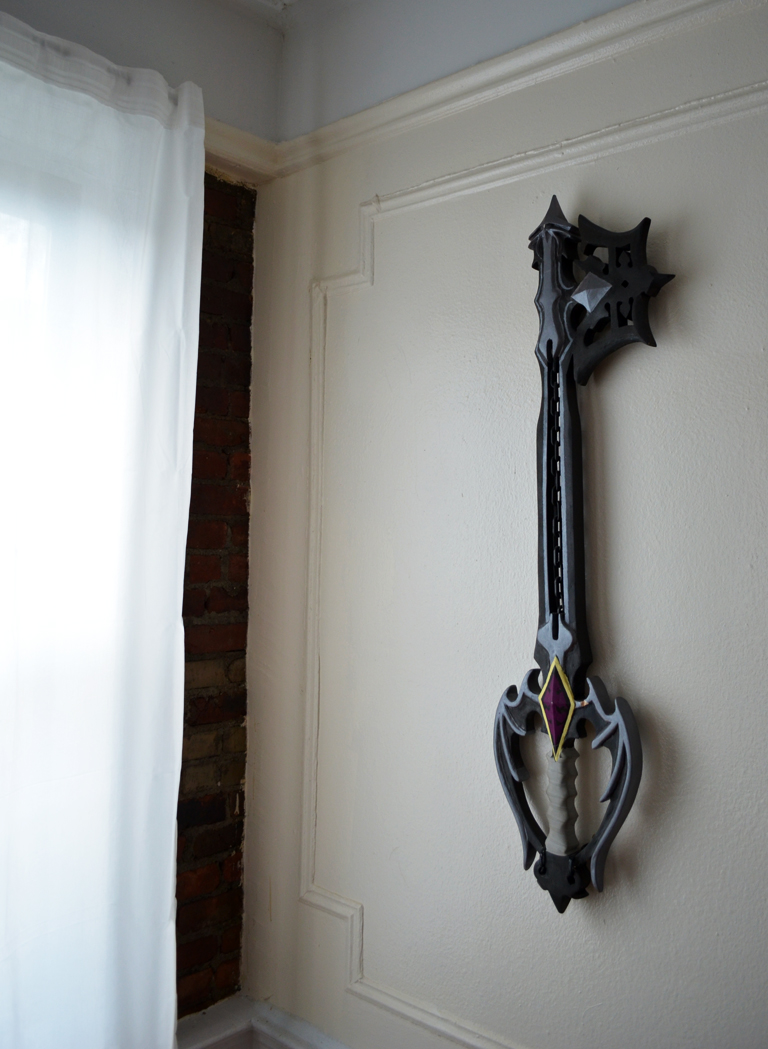
sword

We were singing little ditties
all summer.
We were singing little songs
of peace.
We had hopes to dare, to soar, to crash,
for we were little scamps
that summer.

We were riding adventures
all summer.
We fought hand-in-hand
together.
We braved far lands,
through bogs, our parents.
With our wooden swords we staved off dragonflies,
last summer.

But last summer
had come to an end.
Last summer did, as all summers are wont to do.
We were made to grow up
and say our goodbyes.
We may have traded our suits of armour
for suits of linen,
our swords become mantelpiece attractions.
But I will always remember
our summers.

Waking dreams

It is often said that dreams are manifestations of the subconscious; I find that very plausible. As if spending every waking moment being reminded that I have yet to find a job is not enough, I am dreaming about them in my sleep too.

I have always had the ability to remember my dreams pretty well, though I am not sure that’s a gift.

I am back in Singapore, but instead of returning to my parents’ home, I go to my grandmother’s. “You’re back,” she says, happy to see me return, and I said, “Yea, but I will have to go back soon.”

“You should call your parents and let them know,” she says.

“Ok, I will do that later.”

And then I procrastinated by going grocery shopping. Being back home, I need not scrimp and save when it came to shopping to feed myself. I did not have to forgo buying meat because it was a tad expensive, I did not have to buy the hardiest vegetables and produce so that they last in the fridge the longest. I could sense the temptation to just embrace this purchasing-power-freedom.

I made it home, and then I called my mother’s mobile phone, instead of my father’s, but a bad connection forced me to call the house’s landline instead.

“Mom, I’m back.”

“That’s great. When did you return?”

“Earlier this morning,” I lied; in the dream I returned last night. “I’m at grandma’s now.”

“Ok, will you come over for dinner later tonight?”

“Yea, sure.”

“How were things in the States? How was the flight?”

“Er, we’ll talk more when I go over. See ya later.”

“Alright.”

I could sense that my father was there in that room when I was talking, and it was an uneasy feeling.

The dream ended, I never got to go over to meet my parents for dinner. Maybe I didn’t want to.