The Hexacoto

Listening to the sound of one hand clapping

Journalism is killing journalism

I am out of college, trying to enter the field of journalism. “Are you crazy?” my friends and peers tell me, “Journalism is dead!”

But who are the ones killing journalism?

Journalism isn’t solely dead because people are reading physical newspapers less and less — people go online for their sources of news. People still need the news, and all that is happening is that newspaper journalism is simply undergoing a transformation, not death.

It is the journalism industry itself that is killing itself by being unable to change simply because they’re not letting anyone new in.

Having spent nearly three months job-hunting for journalism jobs, all entry-level positions have a minimum requirement of three years of experience, and that they’re only looking to do experienced hires only. This locks out an entire generation of people with fresh ideas and enthusiasm who have not yet been tainted by the whole “journalism is dead” creed yet, but rather cycles around existing journalists who are even deadbeat about their own prospects.

Other industries in IT and finance constantly take in fresh hires and in its young blood, is able to reinvent itself and stay on top of changes.

Journalism tries to protect itself by holding on to its existing assets and shuns acquiring new people, landing itself slowly into attrition and becoming irrelevant.

How can we make news accessible to the future generation? The easiest way to that answer would be to ask people in that generation, wouldn’t it?

Of course, it is easy to say that as much as papers want to hire, they are unable to because of finances. Well if they keep up in this way, eventually they will go the way of the Boston Globe, Washington Post and Chicago Tribune; sold off to people who are less interested in producing journalism than in serving their own financial interests.

So for the sake of the future of journalism, start hiring already.

“They’re all brainwashed”

On the way back home early this morning, on the subway, this Israeli guy started talking to me.

“Hey! Are you from China?”

I said I was not.

“Japanese?”

I told him I was from Singapore.

“Oh I thought you might be Chinese or Japanese, you have the same eyes as my girlfriend,” and he proceeded to tug the sides of his eyes, “She’s half-Japanese, half-Italian, and your eyes are similar. I love my girlfriend, but I disagree with what she believes in.”

Casual racism aside, I asked, “What do you mean?”

She was a teacher who taught in a school for Arabs, he said. As a result, she sympathises with the plight of the Arabs in the whole Israel-Palestine conflict, and takes the sides of the Arabs in the country instead of the Jews, which he is.

“She says things that are crazy, just like the rest of them,” he said, “They’re all brainwashed.”

I thought it was funny that he should say that, because the Arabs in the country probably thought the same of the Jews. In fact, a couple months ago, I got to meet a recent immigrant from Israel who echoed the same sentiments, almost verbatim.

“The Arabs will not hesitate to take over Israel if they could,”

“They’re all brainwashed from young into believing their nonsense,”

“You give them a little, they keep wanting more. They’re not satisfied with equality,”

These were some of the sentiments that both the Israeli men, whom I met several months apart, echoed, almost word for word. It was as if they were reciting from something learnt in the past.

Then, the guy on the subway asked me,

“So, whose side do you take? What are your views on this issue?”

I opted for the safe path and said, “It is not in my place to comment; I’ll let them Jews and Arabs, Israeli and Palestinians work it out.”

Smelling without your nose

Poetry and prose these days are very good with conjuring metaphors and images and the such, and they are very expressive. But I feel that modern poetry lack a sort of creativity in their use of the language. True, the images conjured are very strong and vivid, but in the reading the poems, one mostly appreciates the effect of the images and not so much the language. I would look at my own writing and think that the content is strong but were I to look at the words used alone and how they relate to each other, they are nothing special.

I think it’s because we’re too used as writers to acutely represent and display our senses and what we think and feel — we are able to show readers what we see, what we hear, and feel, through our similes, metaphors, analogies, onomatopoeia, etc. But these uses are expected and staid, after a certain point; there is nothing surprising about using a tapping dactylic meter to represent galloping action.

What if we were not allowed to see with our eyes, hear with our ears, smell with our nose, taste with our tongue, or touch with our skin? Just as a blind person sees the world differently, with his hands, surely we must be able to write about our experiences with the world through our immediate mediums?

With that, I bring to you the challenge of writing about smelling without using your nose.

I will try to write one paragraph about two topics about smelling, introducing that I am smelling something, but subsequently never using any word or phrase that is associated with the nose, or typical flavour words with which smells are associated. Let’s see if I can succeed.

The smell of fried chicken

The very first thing whenever I cycle past the Crown Fried Chicken shop in my neighbourhood is that I always smell the fried chicken on my face first. That wafting, hovering film hangs waiting in the air, waiting to arrest anyone who passes by in hopes of tempting them in for a piece of fried chicken. But that wafting, hovering film also hangs onto my face as a perceptible cling of grease that whets my appetite, even as I salivate from the thought of the crunch of batter-on-skin, the ooze of juice that washes down the side of the tongue, and the slight but oh-so-delightful burn from the steam that escapes the meat as teeth sink into yielding flesh. In but three seconds I would have already cycled past the shop, but I have left my stomach behind on the side walk, peering longingly through the filthy windows, wanting to be filled up with fried chicken and fries.

The smell of rain

I find the smell of rain after it has rained unpleasant — that scrubbing it does to the inside of my nose as it evaporates off of the side walk, that tugging feeling as it roils off of your arms and face. Had I wanted to smell mould, I’d have gone to the basement and stuck the green patches festering slowing up my nose, not to be assaulted by liquid decomposition and acidity that hangs around after the event like an unwelcome customer. Nobody ever smells the rain too much as it is happening, for they are too preoccupied by the sounds, the spectacle — the most people get is a sense of wetness in the air. But after-rain rain reminds you that it had been here, and sticks its proverbial armpit in your face, in my face, in its humidity and the awful contractions it leaves on my tongue.

To match nature

bluefields

There lived a man in Utah, who loved for things to match.
He had a picture of his farm, and in the photo, there he was,
clad in his Sunday best:
right in front of his prized wheat fields,
in a striking blue suit and pants.

But as he loved for things to match, and this picture was no exception:
the fields in the background matched the smiling man’s suit
for he had painted them blue.

Grammaticality is gangsterism

What better way to understand what is the purpose of grammar than by having to explain it to someone else?

A couple days ago, I met up with a friend to engage in workshopping each other’s writings. She was naturally stronger in Chinese, and I English, and so we both wrote a piece in each other’s weaker language.

I started by editing her poem for grammar. There was a line she used, “My feelings to him,” which I pointed out is ungrammatical. I said, “You could use ‘My feelings ‘for’ him’ or my feelings ‘towards’ him instead.” She asked why can’t she use “to” when “to” and “towards” have the same meaning; a directional preposition?

She asked me, “What is the purpose of grammar? It seems to be getting in the way of communication; people dismiss my speech because they think my grammar is not perfect, but isn’t communication about getting your point across?”

I was stumped; how often does one think about what grammar is for?

A quick search on Google about “Why is grammar important” yielded these common answers: To be able to talk about the language, and for concise, clear communication.

I asked a linguist friend, and he could only conclude why we have grammar, not why is it important. A Chomsky-esque approach would be that language and grammar are innate, then humans naturally create grammar when dealing with language; psychologist Steven Pinker notes that even deaf babies and children exposed to pidgin produce language in a grammatically-consistent manner.

What this means is that grammar is the basis in which we are able to formulate our thoughts in a particular language — a skeleton structure, if you will. Without grammar, we can still strongly feel about a topic with mere words — you only need symbols to hold meaning — but one cannot actively vocalise these thoughts without knowing that structure. From mere feelings, we graft these feelings into actuality and words around the structure that’s innate to us.

But that still does not explain why grammar is important in the way we deem it today. We say that without proper grammar, communication breaks down as meanings are lost. How true is that? Compare these:

“I am baboon.” “I are baboon.” “I am a baboon.”

They all mean the same thing, but the meaning is evidently clear when one hears any of them. The only difference between the first two grammatically-incorrect examples and the latter grammatically-correct one is that people would stop to note that the first two are grammatically-unsound, but the meaning of the sentence otherwise is gleaned regardless. Of course, egregiously grammatically-unsound sentences do impede understanding of meaning, where if one said something like, “Apples red is food favourite me,” and even then most people can still understand that sentence, with some time.

Really, it seems that for the most part, the grammaticality that we’re obsessed with contributes little to the understanding of meaning, but more so to judge people when they deviate from the correct form. We peer pressure each other to conform to a communally-agreed standard and belittle those who don’t, almost akin to gangsterism. Thus you have your pedants who would sneer at the usage of “comprises of” whereas most people don’t even know that it is technically ungrammatical. But ask these pedants why “comprises of” is ungrammatical, most would only be able to tell you that is because what was decided in the past.

But grammaticality is never dictated by what was said in the past — it is always decided by what is agreed upon in the present. It might have been inherited from what people in the past agreed on, but what they agreed on is always susceptible to change and still pending the approval of the current community using it. The pronoun-verb agreements we use today would have been ungrammatical in Middle English, where there were distinctions (“I speak,” “Thou speakest,” “He speaketh,”). Even between dialects in the same time period, what one community sees as grammatical might not be in another; an example today is between African-American Vernacular and General American English speakers. Many AmE speakers would think a speaker of AAVE as being ‘ungrammatical’ or plain wrong, when in fact AAVE has just as many rules governing it as AmE.

Linguists push for a descriptive linguistics stance; one where language is studied as it is used without value judgement, as opposed to a prescriptive one. Yet often it is the lay person that proclaims fire and brimstone should one not use the subjunctive properly, or were a person to mess up ‘who’ and ‘whom’. Funnily enough, that linguist friend tells me an anecdote that on a dating website that asks “Is proper grammar important to you?” he put the answer “No,” but only in the sense that he’s not a prescriptive linguist; you get a case where most everyone else would have indicated “Yes” on that question, linguists, who would be the ones to most academically make comments on grammar, don’t really care that much for “proper grammar.”

So to my friend who made the grammatical mistake, yes I understood what you wanted to say, but I suppose to not let other people judge you as intellectually incapable by mere virtue of your grammar, it is probably best to yield to public pressure and learn “proper grammar.”

Long Islanders love garage sales

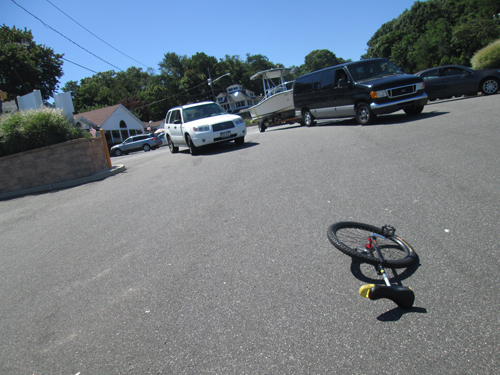
li1It’s been a while since I last did  a long-distance unicycle ride, but I decided to go visit my friend on Long Island, and that’d give me an excuse to do some long-distance. The route would have been about 67 km/41 miles. I was to start in Queens and meet him at the Three Village Shopping Center just north of Stony Brook University. Because WordPress.com does not allow embeddable live maps, here’s a picture of the route. Scroll to the bottom to skip to the stats.

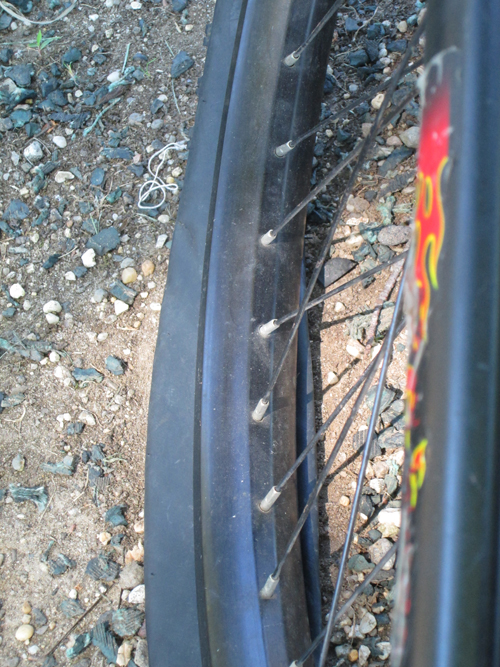
sbkYou’ll come to realise that the trip stopped at 58km, that’s because I got a flat tire and had to stop. And I was so close! I had about 9km to go and I was forced to stop.

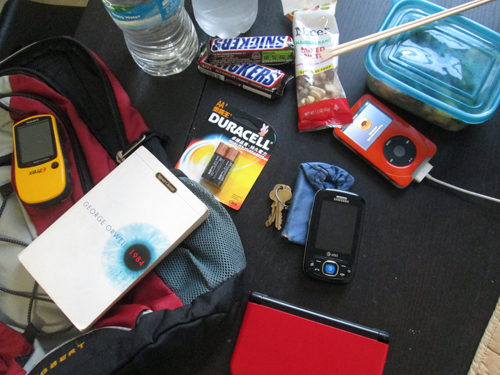
li3My rations for the trip: GPS, a book for the train journey back (I wasn’t going to ride all that distance back!), extra batteries for the GPS, my wallet and phone, MP3 player, 2 Snickers bars, 2 litres of water, some nuts, potato salad, and a Nintendo 3DS to see how many steps the pedometer in the 3DS registers the journey as.

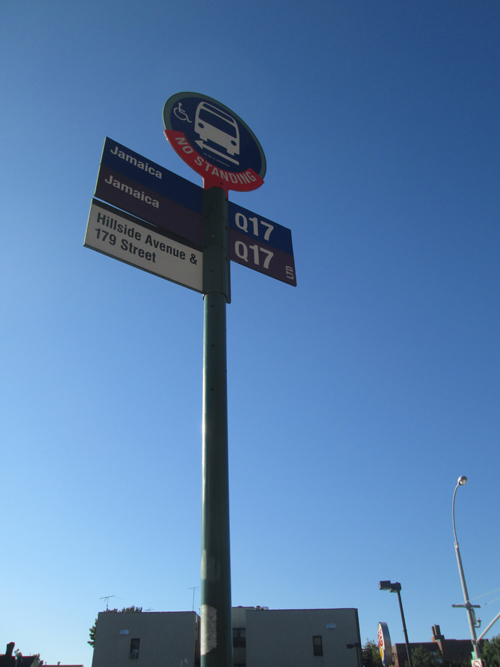
I started out in Queens, since I figured if I were going to hang out with my friend, I probably shouldn’t be completely pooped out by the time I arrive. Had I left from my apartment in Brooklyn instead of Queens, that would have added an additional 13km to the journey, making it 80km total, which would have wiped me out.

li2li4

li5

Queens roads are the absolutely terrible; potholes, roads that are not level, cracks, and glass shards. I was worried my legs would be over-taxed early into the journey. I unicycled past lampposts that was utterly covered in staples and nails, and a really cute barn-like pit stop. This was all still in Queens.

li6 li7

My first stop outside of Queens was this town called East Williston; it has a pretty church and a pretty train station. That’s about it. The rest of the journey alternated between boring suburban towns, some fairly nice neighbourhoods with ritzy residences and industrial towns.

li8 li9li10

I ended up on the expressway and panicked a little — I thought I was lost and was not supposed to be on it. Luckily, when I saw some other bicyclists on it too, I relaxed. Other highlights of the trip include numerous fresh produce farms and when I made a wrong turn and ended up on King’s Park Wharf.

The journey was on the overall not too hard, until the last leg after I got lost, where it was killer hills, rocky roads and more killer hills. In fact, that was probably why I had the puncture, from going downhill a little too quickly on a rocky road on a killer hill.

li11

Here are some stats summing up the entire trip.

Total elapsed time: 4 hours 36 minutes
Total moving time: 3 hours 37 minutes
Total stopped time: 58 minutes
Maximum speed: 29km/h
Total UPD’s: 2 (One downhill, one when I hit a sand bank)
Total roadkill count: 14
Total garage sale count: 11
Steps counted by the 3DS: 29,611
Breaks taken: 5

I unicycled into Long Island and all I came back with is a weird tanline.

li12

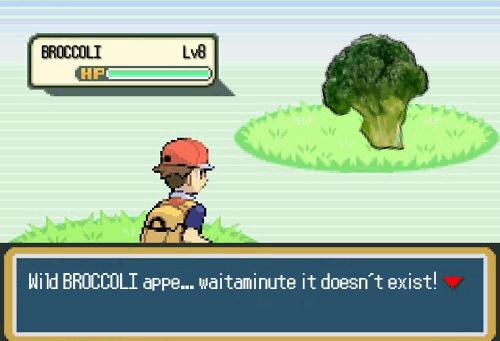
Wild broccoli is a lie

wildbroc1

Did you know that there is no such thing as wild broccoli? They were bred from leafy cole crops in the Northern Mediterranean in the 6th century BCE. Other vegetables that are man-made include the cabbage and brussels sprouts.

No wonder they look so weird.

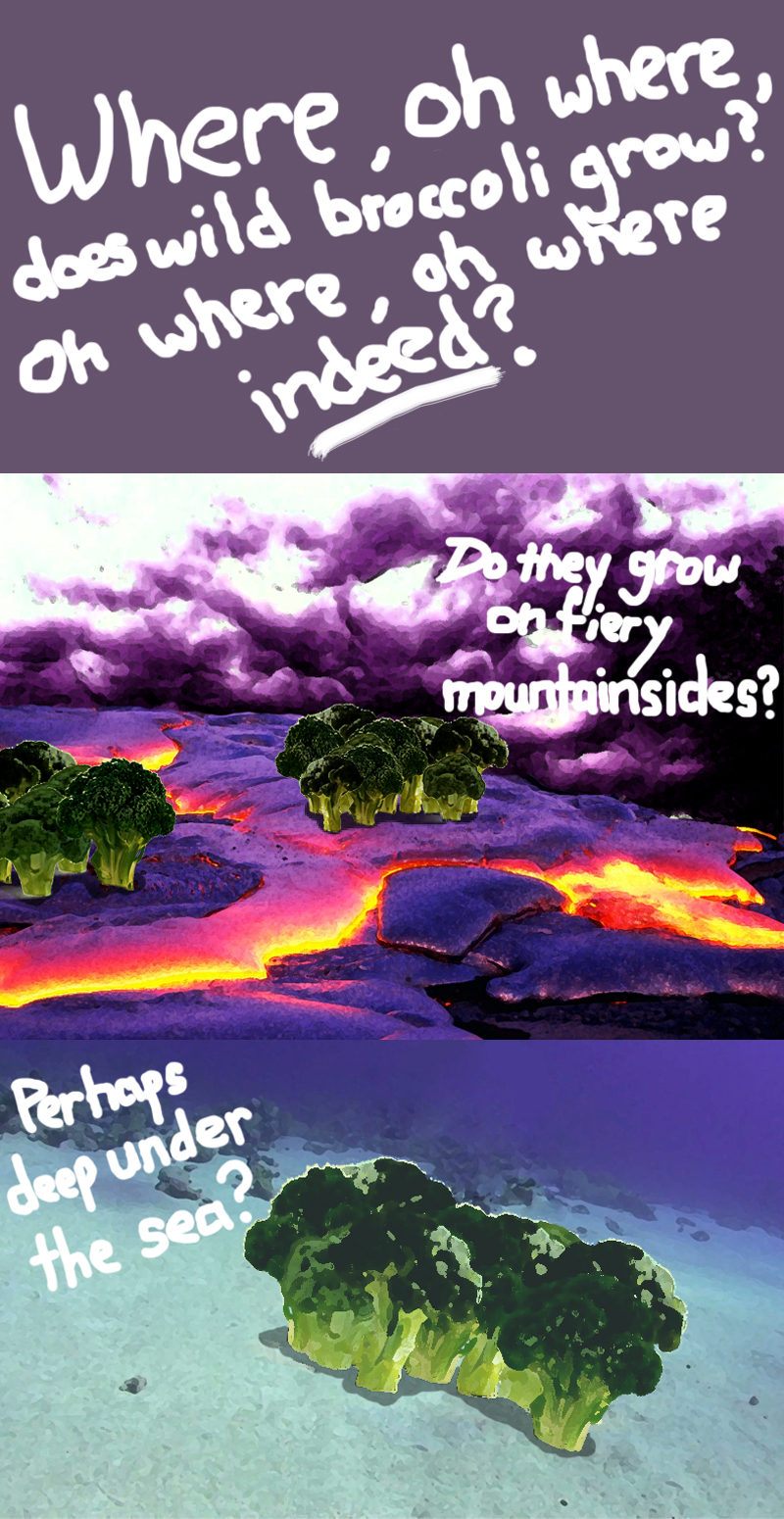
As a kid, I have always wondered what wild broccoli might look like in their natural environment. I thought they looked like miniature alien trees. I once even made illustrations of it.

wildbroc2

Handing over keys

Today marks the day that I should be handing over the keys to the circus club at New York University I helped create. A part of me doesn’t want to — I want to be able to still wield the access to the store and be able to keep my unicycle and other equipment on site. But all things must come to an end, and we must learn to let go.

It is not as if I’ll stop doing circus after today; even if I can’t attend the sessions of the school’s circus club, I will still do my own circus sessions. After all, you started out doing public circus even before the club at NYU started.

Rain clouds have gathered and the skies are grey. A fitting sombre farewell or reluctance to let me go?

I’d rather have blue skies and sunny weather, and let the transition happen as unnoticeable as possible, while still enjoying circus that I’ve grown accustomed to setting up each week.

Making the progress of the country affordable

From the New York Times:

Obama to Offer Plans to Ease Burden of Paying for College

It is about time the wildly sky-rocketing prices of a college education be addressed. While not actually depressing or stemming the increase in tuition, offering more aid is just as good a solution as any.

It must be, and I believe it is, recognised that a college education is ultimately how a country can begin progress. Oh don’t get me wrong, a college education is not necessary for an individual to be successful and happy in life — a person who has never been to college, through innovation, hard work and the right mixture of conditions can live the life he or she wants to. I’m talking about advancement and success at a national level.

A lot of the “better life” we talk about is made capable through invention — green energy, more effective farming methods, waste reduction technologies, communication, etc. — all these are the results of research and development, most if not all, made possible by researchers and scientists who have had to start in college. There are not many prodigies around who, without having to go to college, are capable of inventions at a scale enough to impact a nation as a whole; most innovations are from the toil of thousands of regular scientists who become proficient at what they do from having received the know-how and training from college and university. If a prodigy is the equivalent of a hundred scientists, rather than focus trying to find the wayward genius, it makes more sense to groom a hundred scientists instead.

If the very basic step of even attaining a bachelors remains out of reach to many because “college is too expensive”, and there might be countless untapped future inventors and pioneers waiting for the right academic environment to unleash their potential, a lot of talent and potential is wasted; all that is achieved is college heads having their pockets lined with more money.

Why is college the vital stepping stone, and not say, high school, to a country’s advancement? It is true to say that every step along of the path of education contributes to innovation’s path, but high schools being unaffordable is not quite a problem in this country, college is.

The government is investing in the country’s future when it decides to give students access to their own ingenuity by helping make the tools affordable; knowledge, and an environment to inspire.

Chasing the sun, away from the rain

Will you stay, or will you go?
When your fear turns to determination
to beat the hourglass from running out,
to send out missives,
so as to stay the night.
But how many nights do we have left?
— I dare not count the days
I’d rather keep chasing the sun,
burning legs be damned
fainting hearts be damned,
chasing the sun pursued by rain clouds;
and I really hate the rain.

But this time, I don’t know if I’d merely become
grumpy
or something more
dire.
That’s why I keep pedalling
away from the rain
into the sun.