The Hexacoto

Listening to the sound of one hand clapping

Month: August, 2013

Just Unlike everyone else

subwaysluggo
“Look at everyone on this train, on their daily commute, fuelling the veins of this city. The city’s lifeblood, as it were, yet each is so individually lifeless.

I sit here, glancing around, looking at the eyes of those who sit around me. What do they see? If you look long and hard enough into their eyes (without them noticing, of course), you’ll see yourself reflected in their eyes. And frankly, I fear that seems to be all they see.

Eyes that do not look beyond their phone displays, eyes that, by being buried in books, seeks solace from the anguish of having to acknowledge another when they make contact. Eyes that prefer the brief respite of a commuter’s siesta.

Such hubris I bear for being so self-aware.

The one foot distance that separates those who sit across me might as well be a chasm insurmountable. The woman who sits next to me, straight-backed and proper, twiddles and twitches her finger, taking care to avoid accidentally catching anyone’s eye, lest she has to give them back.

What is that man with his hands on his chin, shades on his face, earphones plugged in, thinking, seeing, hearing?

Everyone unthinking, unseeing, unlistening, uncaring,” thought I, as I put on my earphones and sunglasses, picked up my briefcase and got off at my station on my way to work.


The most blessed man in the world

blessedman

The world’s most blessed man lives in New York.

He also happens to be homeless.

“Rugger” the blessed homeless man was about to cross the street. The traffic light turned yellow.

“You will be safe,” whispers a voice to him.

“The light shines brightly on you,” whispers another.

“Stop bothering me,” Rugger mutters to himself, swatting his hands at the air in an attempt to chase the voices away. A couple of passersby walked hurriedly away from him.

A car in the distance was trying to beat the red light, and sped up.  It dashed past the light, and harmlessly passed behind Rugger, who was still slowly crossing the road. The pedestrian light turned green.

There is a long line already at the soup kitchen, as the volunteers at dish out lunch. He approaches the front, and receives a sandwich. “Sorry, that was the last one. We’re out. You’ll have to go elsewhere for food,” said the volunteer to the person after Rugger. That person curses. Rugger eats his sandwich and readies himself for the day.

Rugger calls the steps of a church along Lexington his home.  Every day, he wakes up, and is immediately filled with a sense of un-direction – there is nothing pressing in his world that he has to do. Sure, he has to eat, and probably hustle for change, but they can be done sooner as later. Apparently it was already lunch time, but what does time mean to a person who has nothing to do?

Rugger looks around to be in his fifties; who can tell? Every day passes him by just like the day before, and the day before that, and tomorrow, and the day after. Rugger might have been called “John” or “Adam” once, but he doesn’t remember. Heck, he doesn’t even know why he’s called “Rugger.”

But unbeknownst to him, he is the world most blessed. He has perfect health, maybe not-so-perfect hygiene, but he has not fallen sick in years, and suffers not even from a toothache or acne.

“SICK AND HOMELESS. ANY HELP GOES A LONG WAY. GOD BLESS.” Rugger’s cardboard reads simply; some of his peers claimed to be down-and-out war veterans, or needing change to get out of town and back home when they’ve never even seen the light of war or have a home to go back to. Why bother to spin such fancy tales? It’s not like people are actually reading the signs closely. He gets just about as much change as anyone else, even with his minimal effort cardboard signs. Rugger falls asleep.

Sometimes, he wishes he would never wake up from when he goes to sleep. But even with sleeping out in on the steps, or on benches, even in the dead of winter, Rugger always wakes up the next day with nary a frostbite.

Waiting for coins to fall from above is not a solitary affair for Rugger – he is swamped by voices he keeps hearing even as a quarter occasionally drops into his cup.

“Favoured one, rest easy. Your journey will be smooth-sailing,” another whisper.

“Nothing will touch you.”

“No harm shall come to you.”

“Just let me sleep, you buggers,” uttered Rugger.

And in this vein, Rugger sits, having to endure these whispers of endearing protection.

He needed to take a leak. He got up, to a corner and peed at a scaffolding. He heard people yelling at him from the construction workers above. He ignored them, as they were gesticulating wildly at him. He was done, and left, and a bucket containing mixed cement fell at the spot he was at a couple seconds ago. It landed with a loud KRNK. Rugger did not even notice it, for he was slowly ambling back to his spot.

“You are destined for greatness, O blessed one,” says a voice to Rugger.

“Oh yeah?” said Rugger to no one in particular. “What’s so great about this?”

“You live! That is life’s greatest blessing!”

“What kind of blessing is this when every day is lived without purpose? I wake up, I eat, I sit, I shit. And then I go back to sleep and wake up to the same thing again next morning. You say I’m blessed, but I don’t see it.”

“Blessings are not seen with the eyes, they are felt by the mind. When you only look around you, you cannot see, because you do not know what you are supposed to see, yet you will keep casting your sights in the wrong direction hoping to catch a glimpse.”

“Whatever, you’re a whole lot of crap.” And with that, Rugger went back to sleep, for tomorrow to start itself anew.

An eternal soul or eternal ego?

I am not a religious person. I am not atheistic either — I do not vehemently believe in the non-existence of a god.

Last night, hanging out with a friend brought about an interesting discussion about religion. We were talking about how in the medieval periods, churches used stories of hell, fire and brimstone to scare people into believing in Christianity. My friend said people eventually started going to church to be intentionally frightened because it was on some level, entertaining. I said how I learnt that because most people were illiterate, religious art in that period were dramatic, flamboyant and scary, to achieve the same effect of scaring people into belief.

That reminded me of a conversation I had with another friend a week before about the eternal soul. That friend is Catholic and believes in a higher power. I asked him, “What do you think happens to us when we die? Do you believe that we have an eternal soul that endures beyond our physical bodies?” He said he believed that there must be something beyond just the finality of death, and he believed in an eternal soul. I then asked him, why must we have an eternal soul; is it that bad if whatever we know and think ends when we die? He said, wouldn’t that be depressing if all we ever are just stops there, and that he feels that we exist to achieve a higher purpose.

That, to me, sounds a little like the fear of letting oneself simply end; to die. The ego prizes itself so much that it creates an afterlife to exist in the minds of those still living, so that fears of its finality may be placated. In a way, that is the premise of the Christian hell, isn’t it? Just as good souls go to heaven, for bad souls to go to hell, the soul must be eternal first, before it can go anywhere after a person’s death.

The fear of hell isn’t a fear of hell itself, but a fear of what might happen to one’s eternal soul.

If you told a person he could be condemned into hell, but be untouched by hell’s eternal damnation, the “fear” of hell dramatically decreases. Likewise, if you told a person his or her soul would ascend to heaven, but the soul lies in a perpetual possibility of a fall to hell, heaven becomes less desirable. It is a person’s conception of their own soul that creates the existence and purpose of a heaven and hell, and not vice versa.

The key to religious faith is not in external entities; not in a god/God, not in a heaven or hell, but in that one does not simply die after one dies. That is all it takes.

We console ourselves that our dearly departed are better in the afterlife, because we believe they have continued existence after death. When we think about the ghosts and souls of others, in essence we are reminded of our own because we believe that we will one day be like them, enduring in the minds of others.

The truth value of keeping promises

What does it mean when someone promises you something?

“I promise to give you $10.”

In our everyday usage of this sentence, the person who utters this statement obliges himself to give the listener $10, is it not? However, if I utter this sentence and didn’t give you $10, is that sentence considered to be a false statement?

Most people would say “yes,” but in the study of semantics it is not that clear-cut.

What is the meaning of the sentence “I promise,”? To pare down its meaning, that sentence means “I am making a statement about agreeing to do something.” The most important and vital part about promises is that it has to be uttered. A promise is useless if the promiser doesn’t say it to the promisee. While a person can promise himself about something regarding other people (“I promise to protect her from harm.”), the promise is not valid to other people unless they hear it from the promiser (“Why’re you trying to stop me from crossing the road!?” “Oh I made a promise to protect you from harm.” “Get away from me you creep!”).

In semantics, this is known as a performative speech act, whereby a statement is true by virtue of being uttered.

Therefore, when I say, “I promise to give you $10,” did I make a promise to give you $10? Yes I did. Am I going to give you $10? I can’t afford to, I’m poor. But there is no way to look at the sentence I uttered earlier (“I promise to give you $10”) and say that that sentence is not true, because I did promise. I just did not keep my promise.

Tense matters when it comes to performative speech acts. When you change that example sentence to the past tense, “I promised to give you $!0,” that sentence can be false, because if you made no such promise prior, it is false. The future tense is slightly trickier — “I will promise to give you $10.” Is that itself a promise to exact a promise in the future, since “will” seems to have similar ‘promising’ functions, although slightly weaker than “promise” itself? Or is it a lot simpler, where its truth value is determined by whether the described action is carried out in the future?

Other fun examples to think about include:

  • “I now pronounce you man and wife.” – Are the couple not man and wife prior to the speech act, as they go through the wedding?
  • “You are under arrest.” – Was the person prior to the sentence not under arrest, even though he might be cuffed?
  • “I sentence you to death.” – Was the convict not sentenced to death prior to the utterance of the verdict, even though the jury had already decided?

My Milo is ‘kosong’ out of necessity

miloI am a huge fan of Milo, this chocolate malt drink that I have been drinking since I was a kid. Back home, the way it is usually made is to put heaping spoonfuls of the chocolate powder, add hot water and then a spoonful of sweetened condensed milk. Not with regular milk, not with creamer, just condensed milk.

These days, I’ve been having to drink my Milo ‘kosong’, or ’empty’ in Malay. What that means is simply a cup of Milo without any condensed milk; just Milo powder and hot water. This variant is preferred by those who like their Milo less sweet, since there is a measure of sugar in the Milo chocolate powder mix already.

Milo has been my regular substitute for slabs of chocolate, since it is rather chocolate-tasting and we all know chocolate makes people feel better about themselves. Heaven knows I need plenty of feel-goodness, to help the days pass by.

condm

I had a can of condensed milk at the start, and every cup of Milo made a spoonful of this sticky, sweet goodness would always go with it. Sometimes even two, if I felt like it. At times, I would even lick the spoon for the remnants after I put it into the drink. I have on occasion, simply taken a teaspoon of the stuff because it tastes really good (don’t judge).

But as the condensed milk fell from brim to bottom, and the spoon made a cloying scrape that signified the pending depletion of the condiment, I started to ration it. A full teaspoonful of condensed milk per cup of Milo became half a spoonful. Eventually the condensed milk ran out.

I then started using the milk for my cereal into my Milo, which is not as good, but a fair replacement. After all, I had run of cereal and was not planning on buying any cereal for a while, and I had been using whatever milk was left in cooking anyway. Making Milo is sort of cooking. It is a preparation of a beverage — the use of milk in Milo is certainly justified.

It would not even be a week before even the milk disappeared. And thus for the two weeks, my Milo has been unsweetened, unmilked, unembellished by anything. But I persist in imbibing this concoction, because even without the sweetness of excess, life and cups of Milo go on.

I might be unable to afford the sweetness that makes our life pleasurable, but that does not mean I should simply throw out my brew or stop drinking Milo altogether. We have become a culture so addicted to the sweet things in life that we forget what it feels like to live humbly. Maybe I grow to like the taste of ‘kosong’, maybe I will pull through and find a job and one day be able to afford condensed milk again. But in the meantime, let the hot chocolate warm my heart and relish in the joy of knowing at least you still have Milo to hold in your hands.

(If anyone is wondering why I can afford Milo but not condensed milk, when Milo in New York costs like $14 or something ridiculous for a 1kg can, I can’t. These cans of Milo are gifts. I will lament the day I run out of even Milo powder.)

Last Summer

sword

We were singing little ditties
all summer.
We were singing little songs
of peace.
We had hopes to dare, to soar, to crash,
for we were little scamps
that summer.

We were riding adventures
all summer.
We fought hand-in-hand
together.
We braved far lands,
through bogs, our parents.
With our wooden swords we staved off dragonflies,
last summer.

But last summer
had come to an end.
Last summer did, as all summers are wont to do.
We were made to grow up
and say our goodbyes.
We may have traded our suits of armour
for suits of linen,
our swords become mantelpiece attractions.
But I will always remember
our summers.

To be driven to despair

Job seeker, 21, with 3 A-levels and 10 GCSEs, kills herself after she was rejected for 200 jobs

Read more: http://www.dailymail.co.uk/news/article-1267953/Job-seeker-Vicky-Harrison-commits-suicide-rejected-200-jobs.html#ixzz2bABkpoVL

After being unemployed for two years, and after over unsuccessful job application, 21-year-old Vicki Harrison kills herself. I read this today and I felt immeasurable sadness for her family, and empathy for her situation. While I have not been unemployed for two years, there are times when my mind have wandered into the similar regions of despair, self-loathing and frustration.

Every day gained is an extra day lost.

Time is ticking out for me; I’m currently on a visa that gives me a year’s grace to be employed in my field of study. A sixth of it has gone. Unlike Harrison, I don’t have two years.

Today, I bumped into the unemployed friend of mine on my way to circus. He told me that in the two years since he graduated from college, he has been unemployed for a total of 15 months when all his unemployment periods are added up. That’s more than a year, more than half of how long he has since graduated. It did not hearten me to hear that he could have been unemployed for that amount of time.

What if it happens to me? What if my year runs out and I still have yet to find a job?

The problem with being college-educated and being told that you’re good at what you do only sets you up higher for a bigger fall. Harrison has 3 A-levels and 10 GCSEs. I have 3 A-levels and 9 or 10 GCSEs, and a college degree. But these alone do not get you a job. Jobs these days want a minimum of “3-4 years work experience” for junior, associate or entry-level positions. Well, what are fresh-graduates supposed to do to get this magical work experience for entry-level jobs that are supposed to help them get experience? What’s the level below entry-level where graduates can glean experience from then? Friends have told me that internship experience counts, but I can scarcely imagine a hirer choosing a fresh-graduate with only internship experience over someone who has actual work experience from a time when entry-level was really meant for people to enter into the industry.

I wonder how long I can hold out before my font of optimism snuffs out?

Chasing Roads

otakarova

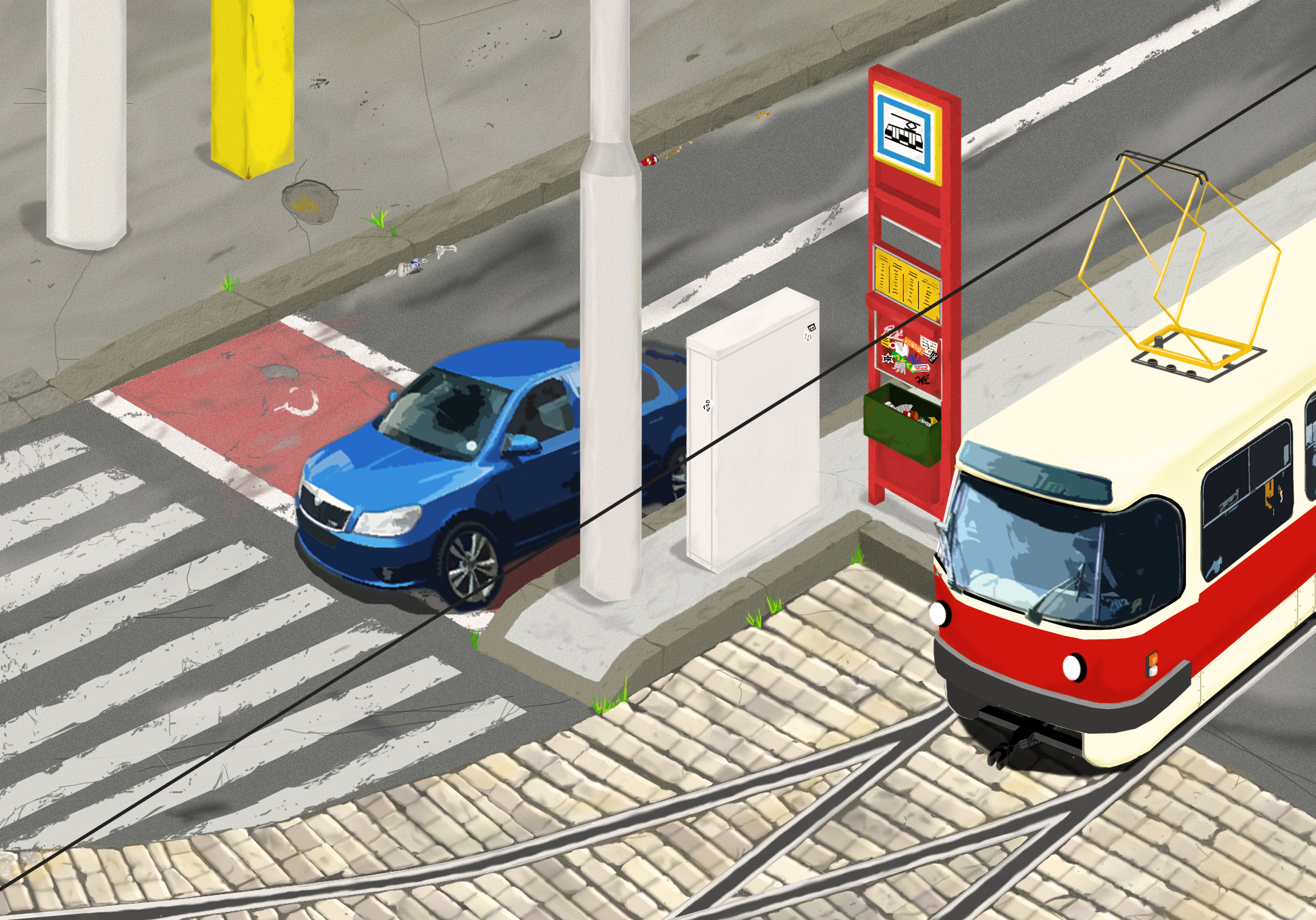
Once upon a time, in Prague, a tram and a car stopped at the corner of a street called Otakarova. The traffic light was red and both vehicles were waiting for the light to turn green.

“You know, you have it really good,” says the tram, let’s call him Twenty-four, to the blue Skoda car who was waiting alongside him.

“What do you mean?” says the blue Skoda, whose name is Rush, because that’s what his owner named him. “Why do you say I have it really good?” asked Rush to Twenty-four, as his engine rumbled silently and he went put-put-put.

“You have so much freedom on the road. Look at you, after this traffic light turns green, you’re allowed to turn left, right or go straight ahead or anywhere you want to go!” says Twenty-four. “As for me, I go wherever the tracks are laid for me.”

Rush considered what Twenty-four said, and looked at the roads around him, and then he said, “But looking at the roads, you have options too! The tracks bend left, curve right, lead straight ahead.“

“I have choices?” Twenty-four scoffed. “While the tracks bend left, curve right and lead straight ahead, I cannot take any that I wish to. Do you see that small, red blinking light above the traffic lights?”

Rush swivelled its headlamps upwards, and saw that above the traffic lights was a smaller single light that had a red arrow, blinking steadily. It pointed straight ahead.

“Yes I see it. It points ahead,” says Rush.

“There you have it,” says Twenty-four, “that’s the path I will be going, no other ways about it. Many roads have been laid for me, and I don’t even get a say in which ones to take? All I can do is run on schedule and go where I’m supposed to.” At that, Twenty-four rang its bell, alarming a pedestrian who was attempting to run across the road in front of Twenty-four.

“But it’s not so bad, is it?” put-putted Rush, “You’re a great big tram! On the roads, you’re the king – everyone has to give way to you, maybe with the exception of ambulances and police cars. You have the right of way and if you crossed paths with me, I’m expected to maybe even go up on the pavements just to make way for you if the road is too narrow for both of us.”

Rush continued, “Also, look at the good you do for everyone! Hundreds of people, with your help, make it to work, to school, to wherever they need to go.”

“Hundreds of ungrateful people who litter and vandalise within me,” Twenty-four shot back.

“Hundreds more people who’re glad you bring shelter from the rain in the spring, and warmth from the biting cold of winter,” says Rush.

“Trekking dirt in from the rain, vagrants who sleep without meaning to go anywhere, just to be warm,” says Twenty-four. “I wish I could be like you, going anywhere I want to.”

“And I wish I could be like you, and not have to worry about changing lanes, giving way, looking out for pedestrians, etc,” said Rush.

Just then, the traffic light turned green.

“Well it was nice to meet you,” said Rush. “I’m going left now.”

“And I’m going straight ahead, as if I ever had a choice,” rang Twenty-four its bell angrily as it started to roll ahead.

And so they parted ways, with Rush put-putting off to left and Twenty-four moving straight ahead.


A couple of hours later, as Rush was returning back to that junction at Otakarova, and took the route that Twenty-four had taken earlier, he saw a tram lying on its side. There were many people around, some sitting on the sidewalk, some crying, others holding up a bandaged arm. As Rush drove past, snippets of conversation could be heard: “It was as if the tram was trying to go off its tracks or something. How scary!”

Musical memories

Have you ever listened to a song, and be deluged by memories associated with it?

There are certain songs that will always remind of certain things. Amy Winehouse reminds me of my time in Prague, for I listened to a lot of it whilst there. The grey streets and grey looks of people staring across you on the tramvaj will always evoke the soulful tunes of the late musical talent.

Particular albums of Japanese electronic artist, Fantastic Plastic Machine, brings about images of my time in Munich and Vienna.

Songs from Chinese pop singer Faye Wong reminds me of this one friend whom I, of my own stupidity, did something cringe-worthy, and we’re no longer friends. We talked about how Faye Wong is one of his favourite singers. I can’t listen to her songs without being reminded of how dumb I had been.

Music is not something that is merely heard with the ears, but seen by the mind and felt by the heart. All it takes is music to remember memories, to feel emotions, to affect judgement (BrE. AmE uses ‘Judgment’). Just as diaries hold your memories for posterity, we are just as able to meaningfully code data into the tunes and lyrics of music.

It is said that Socrates used different locations of his home to memorise his oratories, by assigning a word or fact to a specific object or feature of his home. Likewise, I think tunes, rhythm and lyric can achieve the same storage effect.

Losing these memories, on the other hand, seem a lot harder. How does one consciously forget a tune? When one hears it, recollection of it is instantaneous. Plus, many memories imprinted onto music are done so subconsciously — perhaps an incident happened while you’re listening to the tune, but it is seldom a concerted effort. This makes losing that memory more difficult.

Be wary of musical memories, they have ways of nesting in your head.

Can I have some more gruel, please?

You know you’re falling on hard times when you start rationing even cabbage, and cutting out a 1/16 part of it for lunch.

Grocery shopping has become challenge as I start to cut out on things that were once deemed nice to have, but are now crossed out out of necessity. I have always been a frugal shopper, but lately I have had to extend how long groceries last in my fridge, thereby reducing the frequency with which I have to go grocery shopping. I now have to try to make two weeks’ worth of groceries last three.

I have resisted the temptation to live on a diet of processed food, even though they are probably cheaper. It’s depressing enough that I don’t have a lot of money, I shouldn’t have to suffer the idea of eating sub-par frozen dinners and the such. Besides, eating unhealthily might eventually lead to health complications that might end up costing me more. A friend who is similarly unemployed tells me that on certain sale days, frozen dinners can cost as little as $1 each, but having never grown up in a culture of microwaving meals as a norm, that idea did not sit well with me.

On average, I manage to rack up about $25 on Asian groceries and about $35 for Western groceries each trip. This $60 usually sufficiently provides me two meals every day, for about two weeks, making it a cost of $4.30 a meal a day, which isn’t bad at all. This $60 now has to last me three weeks.

The following chronicles how my diet has changed in this time of rationing.

Carbohydrates

noodles

The above are two of the cheapest noodles available in the Asian and Western supermarkets I go to.  The Chinese egg noodles on the left cost about 80 cents (the supermarket doesn’t tax!) and the capellini pasta costs about 88 cents before tax. While it seems like the pasta costs only a paltry eight cents more, too little to make a difference, the number of servings I can prepare before I finish each box is hugely different. These noodles are all the carbs that I buy.

I wonder why I always end up using finishing the box of pasta faster than the Asian noodles. I usually finish using the box of pasta after 4-5 meals, whereas the Asian noodles lasts me about 5-6 meals. This is odd because by weight, the pasta is a full pound while the Asian noodles are about 14 ounces. Maybe because the Asian noodles are in cakes and makes it easier to divvy up (one is usually enough, two if you’re really hungry) whereas I usually just eyeball how much pasta to use.

I have also stopped buying bread or pitas or tortillas.

Meats/Proteins

prot

I used to have protein from meat at least one meal a day, or once every two days if I felt like having less meat in my diet. Now, my source of protein comes primarily from eggs, and occasionally I’d be able to have some pork, perhaps twice a week. The one-pound round of pork butt which I made char siew out of in a previous post has been made to last me two to three weeks, by strategically cutting off what I need and freezing the rest.

I have also been substituting meat with tofu, because a pound of it is about a dollar.

Vegetables

veg

This is the above-mentioned 1/16 of a head of cabbage, which I have been painstakingly rationing, since they’re one of the hardiest vegetables to keep in the fridge. Even though a pound of carrots is $1 each, I also have a bag of frozen carrots and peas. However, I reserve the fresh carrots for making stew, and use the frozen ones in pasta and rice dishes. I have stopped buying bell peppers and fresh herbs such as basil, rosemary and thyme.

I love mushrooms, but they’re impossible to keep for extended periods without turning mushy.

Luxuries

snack

Chocolate has been struck off of the list. Today, my friend was kind enough to give me a slab because it was too bitter for her. Thanks goodness I love bitter chocolate.

However, I have been snacking on spoonfuls of peanut butter instead; peanut butter that I bought a long time ago but ran out of bread on which to spread.

I have also been drinking copious amounts of Milo because it tastes so chocolatey.

Flavorants

flav

I used to have flavour bouillons and stock pastes, but ever since I ran out, I’ve been relying on using shallots, onions, garlic and scallions as a replacement. These vegetables are rich in umami, and when burnt in a pot or pan, release a lot of flavour. Buying scallions from Chinatown has been a steal for me, since in Chinatown they’re usually two or three bunches for $1 (approximately 5-6 stalks per bunch!) whereas it might be as expensive as $1 a bunch in Western supermarkets. It’s also $1 for a rope of garlic and a dollar-something for a bag of shallots. Scallions last only about three weeks before they yellow, but onions, shallots and garlic stay good for a really long time, about a month or so.